
- Home
- >
- Beta Thalassaemia And Gene Therapy
Beta Thalassaemia And Gene Therapy
WHAT IS THALASSAEMIA?
Thalassaemia are forms of inherited blood disorders caused by abnormal haemoglobin production.
Two (2) main types:
- Alpha Thalassaemia
- Beta Thalassaemia
Thalassaemia is one of the most common autosomal recessive disorders and is highly prevalent in countries within topical belt, including Malaysia.
A thalassaemia carrier couple has a 25% chance of producing a thalassaemia major baby.
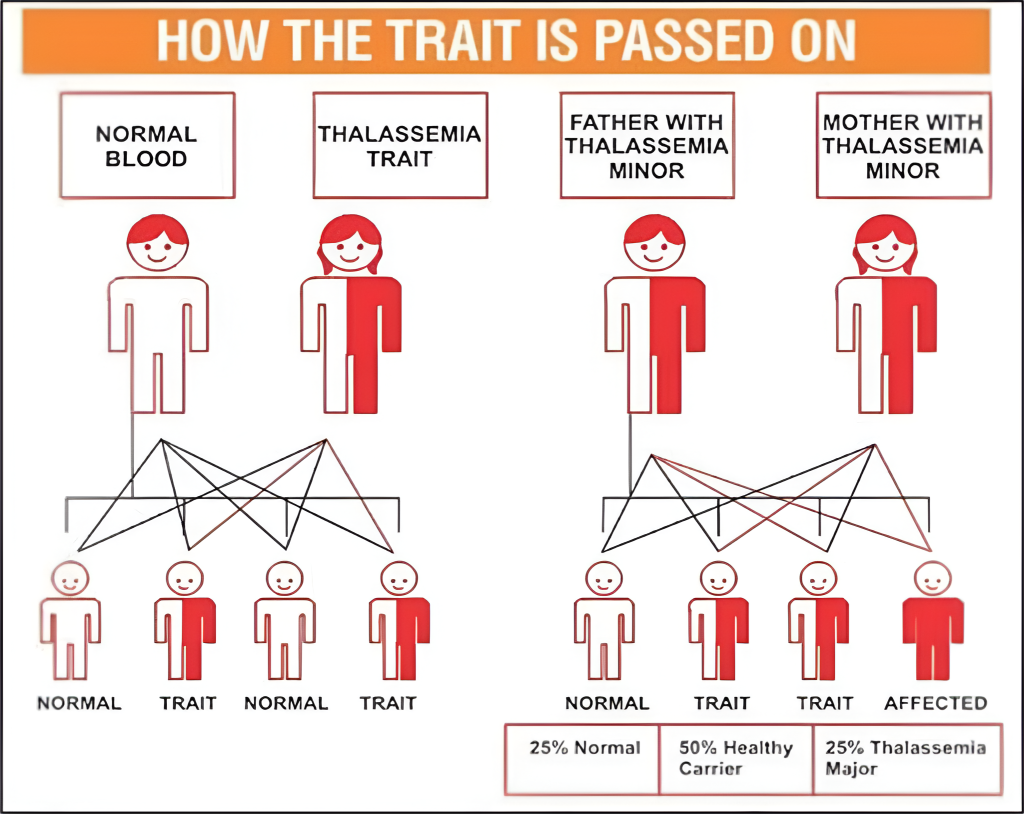
Source from thalassaemia.org.cy
BETA THALASSAEMIA
Beta thalassaemia is caused by a variant in the beta-globin gene (also known as HBB gene). It will cause lack or severe reduction of β-globin.
Beta thalassaemia can be categorized into:
- Minor/ trait – Mild clinical phenotype/normal (1 normal copy of β-globin present)
- Intermediate – Still allow for some β-globin production, severity is variable, phenotype can ranges from mild to moderate Non-transfusion dependent (NTDT)
- Major (Cooley’s anemia) – severe clinical phenotype which requiring regular transfusion (TDT). If untreated, it causes anemia, splenomegaly and severe bone deformities and progresses to death before age 20
Majority of patients in Malaysia were diagnosed with haemoglobin E (HbE)/ β-thalassaemia, followed by β-thalassaemia major, haemoglobin H disease, β-thalassaemia intermediate and others.
HbE/ β-thalassaemia – Severity is very variable. Clinical picture ranges from NTDT to TDT.
CURRENT LIMITATION IN THALASSAEMIA TREATMENT
Several limitations still remain particularly for managing beta thalassaemia while advancements thalassaemia treatment have improved patient outcomes. These limitations can affect the effectiveness, accessibility, and long-term prognosis of patients:
- Dependence on Regular Blood Transfusions
- Frequency: Patients with beta thalassaemia major require lifelong blood transfusions, often every 2-4 weeks. This places a significant burden on patients and their families.
- Risk of Repeated Transfusions can lead to complications like allergic reactions, fever, or in rare cases, hemolytic reactions
- Blood Supply Challenges especially in countries with limited healthcare infrastructure.
- Iron Overload and Its Management
- Iron Overload which can lead to severe organ damage if not properly managed.
- Chelation Therapy Challenges: The patient must adhere to strict medication for life, which can lead to poor compliance de to side effects.
- Bone Marrow or Stem Cell Transplant
- Limited Eligibility: The success of the transplant depends on finding a well-matched donor, which can be difficult.
- Risks and Complications including graft-versus-host disease (GVHD), infections, and a high mortality rate if the procedure fails.
- Cost and Accessibility: The cost of a stem cell transplant is prohibitive in many parts of the world, especially in developing countries.
- Gene Therapy: High Cost and Early Stage
- Experimental Nature: Gene therapy is still in the early stages, with many patients undergoing clinical trials. It has not yet become a widely available treatment, and long-term outcomes are still being studied.
- Cost: Current cost is extremely high, making it inaccessible to most patients. As of now, only a small number of patients have benefited from this approach, primarily in high-income countries.
- Technical Challenges: The process of gene therapy is complex, requiring advanced technology and expertise. Potential risks include immune reactions or unintended effects on other genes.
OUR FOCUS:
BETA THALASSAEMIA
Gene Therapy: A New Hope
In recent years, gene therapy has emerged as a groundbreaking treatment option, offering the potential for a long-term cure for beta thalassaemia. This innovative approach involves modifying the patient’s own genes to correct the defective beta-globin gene, enabling the body to produce healthy hemoglobin on its own.
- How it Works: Gene therapy uses a viral vector to deliver a corrected version of the beta-globin gene into the patient’s blood stem cells. These modified cells are then reintroduced into the patient’s body, where they produce healthy red blood cells.
- Current Status: While gene therapy is still in its experimental phase, several patients have shown remarkable improvements, with some no longer needing regular blood transfusions. Ongoing research and clinical trials continue to refine this treatment, giving hope for a future where beta thalassaemia can be managed or cured with fewer complications.
CGT focus to build up a local cGMP manufacturing facility and support team to enable an affordable cell and gene therapy solution.
As gene therapy advances, the future looks promising for people living with beta thalassaemia, offering them the possibility of a healthier and more independent life.